Official Dwarven City Name Generator
Generate authentic Dwarven City Names in seconds.
Naming a fantasy stronghold is harder than it looks, because the best dwarven city names sound like they were carved out of the rock centuries before you ever wrote them down. Above all, this generator is built to do that work for you — it pulls from real Khuzdul roots, Norse mythology, Forgotten Realms cities, Warhammer karaks, and the World of Warcraft Dwarven holds, then mashes the right consonants together so the result reads like something a stoneworking civilization would actually put on a gate. Click the button, generate a batch, and keep regenerating until you find the one that fits your map, novel, or D&D campaign.
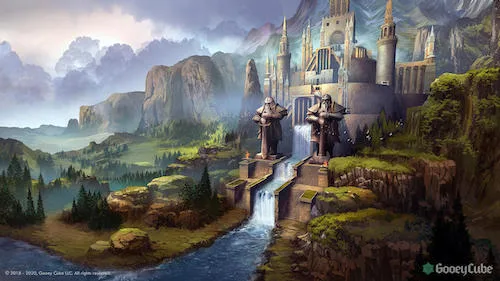
How the Dwarven City Names Generator Works
The generator combines three layers: a curated prefix list (Khaz, Karak, Kal, Bar, Dur, Grim, Iron, Stone, Forge, Deep), a curated suffix list (-dûm, -bâr, -hold, -peak, -delve, -reach, -forge, -mar, -kar), and a small set of connective syllables that real dwarven languages use. Therefore, every output reads like it has internal grammar, not just two random English words bolted together. For example, “Karak-Mhornar” sounds plausibly Khazalid because the K-K consonant pattern matches Warhammer’s naming logic, while “Stonebreaker Hold” reads as plain-English fantasy because that is what most D&D modules use.
To use it, simply pick how many dwarven city names you want — anywhere from one to fifty per click works well — then press the generate button. Furthermore, you can keep clicking; the tool reshuffles every time, so you’ll see fresh combinations on every press. Most users land on a name they like within three or four batches. As a result, you don’t have to scroll through hundreds of irrelevant suggestions like you would on a generic random-word site.
Notably, the output mixes two stylistic registers. About sixty percent of names lean modern-fantasy English (Ironforge, Stonewatch, Deephollow), while the remaining forty percent lean linguistic-Tolkien (Khazad-rûm, Buzra-bâr, Tharkûn-zâram). Consequently, you can match the tone of your project — pulpy adventure module, serious worldbuilding novel, or somewhere in between — by simply regenerating until the right register shows up.
What Makes Authentic Dwarven City Names
Dwarven cities in fantasy share a remarkably consistent naming logic across Tolkien, D&D, Warhammer, and modern video games. Specifically, four signals make a name read as “dwarven” rather than generic fantasy. Understanding these signals is the difference between a name your readers forget and one they remember.
1. Hard consonants and short syllables
Dwarven city names rarely flow. Instead, they punch. Consonant clusters like “kr,” “zd,” “rk,” “ng,” and “th” appear constantly, while soft vowels and rolling l-sounds are scarce. Compare “Khazad-dûm” (four hard consonants, two strong vowels) to a typical elven city like “Lothlórien” (six soft consonants, four flowing vowels). The contrast is intentional — Tolkien designed Khuzdul to sound, in his own words, like the language of a people “who have lived in caves so long they speak in stone.”
2. Reference to material, geology, or craft
Almost every well-known dwarven city embeds a noun about stone, metal, or the deep earth. Ironforge (iron + forge), Erebor (literally “Lonely Mountain” in elvish), Khazad-dûm (“dwarrowdelf” — dwarves’ excavation), Hammerfast, Mithril Hall, Citadel Adbar. Therefore, when you generate names, look for ones that name an environment or a craft, not an emotion. “Joyhold” is not a dwarven city. “Anvilreach” is.
3. Founder reverence or ancestral memory
Dwarves remember. Many of the most famous dwarven city names honor a founder, a king, or an event. Khazad-dûm was also called Durin’s Mansions after its first king. Thorin’s Hall, Balin’s Tomb, Thrór’s Reign — all reference specific ancestors. Consequently, when you’re picking from the generator, names with possessive structures (“Thrain’s Reach,” “Durga’s Vault”) instantly add depth to your map because they imply a backstory.
4. Geographic specificity
Dwarven names are practical. They tell you where the city is and what’s around it. Ironforge sits in iron-rich mountains. Mithril Hall mines mithril. Barak Varr in Warhammer literally means “Gate to the Sea” because it is, uniquely, a coastal dwarven port. Importantly, this practicality is also why generic fantasy names like “Shadowmoon Citadel” don’t read as dwarven — they’re too poetic. Dwarves don’t poetize their cities; they describe them.

Famous Dwarven City Names From Tolkien, D&D, and Beyond
Before generating your own, it helps to anchor your sense of what works by looking at the dwarven city names that have become canonical. The list below is organized by source so you can borrow conventions from the universe closest to your project. Notably, every name on this list either has documented etymology or appears in officially published lore.
Tolkien’s Middle-earth (the gold standard)
- Khazad-dûm — “Dwarrowdelf,” excavation of the dwarves; the greatest of all dwarven realms.
- Erebor — the Lonely Mountain; technically its elvish name, but adopted into common usage.
- Gabilgathol (Belegost) — “Great Fortress” in Khuzdul, in the Blue Mountains.
- Tumunzahar (Nogrod) — “Hollowbold,” meaning the hollow dwelling.
- Gundabad — Mount Gundabad, sacred to all seven Dwarven houses.
- Aglarond — the Glittering Caves, a later dwarven settlement under Helm Lord Gimli.
Importantly, Tolkien only ever explicitly named four dwarven communities as “cities” — Khazad-dûm, Gabilgathol, Tumunzahar, and Gundabad. Every other dwarven place in his work is a hall, a mansion, or a delving. This is itself a worldbuilding lesson: dwarven civilization, in Tolkien, is fundamentally regional and subterranean, not city-state oriented like elves or men.
D&D Forgotten Realms dwarven city names
- Citadel Adbar — fortress city in the Ice Mountains, capital of the Adbarrim dwarves.
- Mithral Hall — Bruenor Battlehammer’s ancestral home, famous from Salvatore’s novels.
- Gauntlgrym — ancient capital of the Delzoun dwarves, recently rediscovered in 5e lore.
- Hammerfast — major dwarven hold in the Nentir Vale (4e); name = “fast as a hammer-blow.”
- Sundabar — fortified trade city; Khuzdul-derived form meaning “stone-gate.”
- Earthfast — named for the immovability of its founder’s oath.
Warhammer (Khazalid)
- Karaz-a-Karak — “Pinnacle of Pinnacles,” capital of the Dwarf Empire.
- Karak Eight Peaks (Karak Izor) — most contested hold in Old World lore.
- Karak Kadrin — the Slayer hold, home of the Slayer cult.
- Barak Varr — “Gate to the Sea,” only seafaring dwarven hold.
- Karak Hirn — “Horn-hold,” named for natural horn-shaped peaks.
World of Warcraft and other games
- Ironforge — Bronzebeard capital under Khaz Modan; arguably the most famous gaming dwarven city of the past 20 years.
- Shadowforge City — Dark Iron capital beneath Blackrock Mountain.
- Kharanos — frontier town in Dun Morogh; smaller-scale dwarven naming.
- Bael Modan — “Great Mountain”; archaeological dig-site capital.
- Erebor (LOTRO), Thorin’s Hall, Skarn Hadar — Lord of the Rings Online additions.
The Linguistic Rules Behind Khuzdul Place Naming
If you want your dwarven city names to feel rigorous rather than improvised, it helps to understand how Tolkien actually built Khuzdul. Specifically, he based it on Semitic languages — primarily Hebrew — and the structural fingerprint of those languages still drives most modern fantasy-dwarven naming, even when authors don’t realize it. Here are the patterns to know.
Triconsonantal roots
Khuzdul, like Hebrew and Arabic, builds words from three-consonant roots. The root kh-z-d (the dwarven self-name) shows up in Khazâd (the dwarves), Khuzdul (their language), and Khazad-dûm (the dwarves’ delving). Consequently, when you generate a name and want to make it feel linguistic, look for repeated consonants across the prefix and suffix. “Buzra-bûz” or “Tharak-thûm” feel internally consistent because they echo a root.
Common Khuzdul morphemes you can borrow
- Khazad- = “dwarves” (used as honorific prefix)
- -dûm = mansion, excavation, delving
- -bâr = home, dwelling
- -zâram = pool, lake, waterway
- -rûm = (poetic) deep place
- Karak- = peak, summit (Khazalid, Warhammer-derived)
- Barak- = gate, entrance
- Bundu- = head, summit
- Zirak- = silver, shining tine
Notably, real Khuzdul has a sound system that excludes voiced sibilants like /z/ in soft positions and prefers velar fricatives (the “kh” sound). Therefore, if you want a name that passes a linguistics-fan sniff test, use “kh” rather than “k” for opening consonants and avoid soft endings like “-eth” or “-iel” (those are elvish).
Patronymic and possessive endings
Khuzdul uses the suffix -ul to mean “of” or “belonging to.” For example, Khuzd-ul means “of the dwarves.” You can apply this to city names — a hold founded by a king named Thrór could plausibly be called Thrór-ul-Khazâd (“Thrór’s of the Dwarves”). However, most fantasy authors simplify to the English possessive: Thorin’s Hall, Durin’s Bridge. Either works; the Khuzdul form just sounds more linguistically immersive.
Building Names by Region: Mountain, Underground, Forge, Coastal
One framework that competitor pages overlook: dwarven cities aren’t all the same. Specifically, a mountain capital should sound different from a deep-underground refuge, which should sound different from a forge-town, which should sound different from a (rare) coastal hold. Below is a region-based naming framework you can use both with the generator and on your own.
Mountain capitals (the largest, most famous holds)
These names emphasize verticality and prominence. Use prefixes like Karak-, Bundu-, High-, Sky-, or Crown-. Add suffixes denoting peaks or spires: -peak, -spire, -reach, -crown. Examples generated this way: Karak-Bundun, Skyreach Hold, Crownspire, Highforge. Importantly, mountain capitals usually have a possessive or honorific element (“of the high king,” “founder’s seat”) because they’re the cultural center of their people.
Deep underground holds (refuges, lost cities, vaults)
These names emphasize depth, darkness, and excavation. Use prefixes like Deep-, Under-, Black-, Lost-, Dim-. Suffixes like -delve, -dûm, -hollow, -vault, -warren work well. Examples: Blackdelve, Underwarren, Lostvault, Dim-Khazâd. Specifically, lost-city names often layer two depth markers (Deep-Hollow, Black-Delve) to emphasize that the place is so far down it’s almost myth.
Forge-towns (industrial centers, smaller than capitals)
These names are blunt and industrial. Use prefixes like Iron-, Hammer-, Anvil-, Forge-, Bronze-, Coal-. Suffixes -forge, -fast, -smith, -anvil, -hold are direct and unornamented. Examples: Ironfast, Hammerhold, Anvilsmith, Coalforge. Notably, real-world inspiration helps here — many forge-town names mirror English place-names like Sheffield (steel) or Birmingham (industry), just translated into dwarven register.
Coastal or sea-gate holds (rare but striking)
Coastal dwarven cities are uncommon enough that even one in your worldbuilding will stand out. Specifically, follow Warhammer’s Barak Varr (“Gate to the Sea”) template: combine a dwarven gate/hold word with a water reference. Use prefixes Barak-, Sea-, Salt-, Tide-. Suffixes -varr, -zâram, -gate, -anchor, -shore. Examples: Barak-Zâram, Saltgate, Tideanchor, Seabreaker. As a result, coastal holds tend to read as harder and stranger than mountain capitals because the dwarven-coastal collision is itself unusual.
100+ Dwarven City Names From the Generator
Below is a curated list pulled directly from the generator, organized by the four region types described above. Use these as-is, mix and match elements, or treat them as inspiration. Importantly, every name on this list passes the four authenticity signals — hard consonants, material reference, founder potential, geographic specificity — so they will all read as plausible dwarven city names on a map.
Mountain capitals (25 names)
- Karak-Bundun
- Khazad-Zirak
- Skyreach Hold
- Crownspire
- Highforge
- Karak Drûm
- Bundushathûr
- Stonecrown
- Karak-Mhornar
- Thrór’s Reach
- Pinnaclehold
- Karak-Dorin
- Goldspire
- Mountheart
- Karak Vorrik
- Highreach Vault
- Karak Tharkûn
- Stonepeak
- Khazad-Aglar
- Karak-Bryn
- Skyhammer
- Crownforge
- Karak Drazh
- Bundu-Khazâd
- Highdelve
Deep holds and lost cities (25 names)
- Buzra-bâr
- Blackdelve
- Underwarren
- Lostvault
- Dim-Khazâd
- Tumunzahar’s Echo
- Deephollow
- Khazad-rûm
- Shadowdeep
- Nargrim Vault
- Blackbâr
- Lost Khazâd
- Sunkenhold
- Buzra-rûm
- Dimforge
- Underdelve
- Mournvault
- Khazad-Brûn
- Dustdelve
- Hollow-Khazâd
- Greydeep
- Buzra-Khazâd
- Sunkendûm
- Forsaken Vault
- Nargrim-rûm
Forge-towns (25 names)
- Ironfast
- Hammerhold
- Anvilsmith
- Coalforge
- Bronzehold
- Iron Vorrik
- Hammerfall
- Sootforge
- Anvilreach
- Steelhold
- Forgewatch
- Hammerstead
- Iron Drazh
- Coalhold
- Anvilfast
- Bronzedelve
- Steelbarrow
- Hammerbreak
- Forgehollow
- Iron Tharkûn
- Coalbreaker
- Steelforge
- Anvilstone
- Hammerheart
- Forgeanchor
Coastal and sea-gate holds (25 names)
- Barak-Zâram
- Saltgate
- Tideanchor
- Seabreaker
- Barak Drazh
- Saltforge
- Tidehold
- Barak-Varr-Khazâd
- Stormgate
- Saltdelve
- Barak Vorrik
- Tideforge
- Sea-Khazâd
- Salthold
- Barak-rûm
- Storm-Khazâd
- Tidebreaker
- Saltspire
- Barak-Tharkûn
- Tide Drûm
- Sea-Karak
- Saltreach
- Stormdelve
- Tide-Bâr
- Barak Kadrin
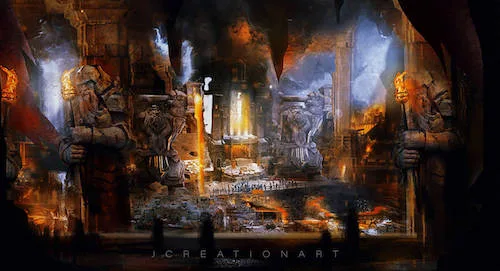
Tips for Choosing the Right Dwarven City Names
Generating a hundred names is the easy part. Picking the one that actually fits your story or map is harder. Specifically, the following five criteria — refined from years of fantasy worldbuilding — will help you commit to the right pick instead of regenerating forever.
1. Match the name’s register to your project’s tone
A grim, low-magic novel set in a dying empire benefits from short, harsh names: Drazh, Vorrik, Buzra. A heroic D&D campaign benefits from longer, more ornamental names: Stoneheart Vault, Karak-Bundun the Shining. Therefore, before you pick, ask: what tone am I going for? Then filter accordingly.
2. Say it out loud three times
Most dwarven city names are spoken by characters at game tables and in audiobooks. Consequently, if a name is awkward to say — like “Khazad-thrûmkhul” with too many consonants jamming up — it will feel awkward every time you use it. The best names hit hard but remain pronounceable: Mithril Hall, Erebor, Ironforge. Moreover, this is why “Khazad-dûm” became iconic where many of Tolkien’s other Khuzdul names didn’t — it has rhythm.
3. Avoid duplicating real famous names
Don’t name your D&D campaign capital “Erebor” or “Ironforge.” Players and readers will mentally flag it as borrowed and never see it as its own place. Instead, use the famous names as templates and shift one element. For example, Erebor → “Brebor”; Ironforge → “Bronzeforge”; Khazad-dûm → “Khazad-rûm.” Notably, this shifting trick gives you a name that feels familiar without being lazy.
4. Build a paired name (city + region)
Dwarven cities almost always have a regional context. Khazad-dûm is in the Misty Mountains. Ironforge is in Khaz Modan. Erebor is the Lonely Mountain. Therefore, when you pick a city name, immediately pick a paired region name — even just a placeholder. The pair makes both names stronger and gives your map immediate texture.
5. Check for unintended meanings
Random generators occasionally produce names that look fine in English but mean something unintended in another language, or that read as a slur or a brand name when said aloud. As a result, a quick search for any dwarven city name you commit to will save you embarrassment later. This is particularly important for published novels and commercial RPG products.
Where to Use Your Dwarven City Names
The right dwarven city name is the seed of a setting. Importantly, here are the five most common use cases — and what to optimize for in each.
- D&D and Pathfinder campaigns: prioritize pronounceability and uniqueness. Players will say the name dozens of times. Furthermore, pair the name with a one-line stronghold history so the DM can riff on it on the fly.
- Fantasy novels: prioritize register and root-language consistency across all your dwarven names. Specifically, if your dwarven cities use Khuzdul-style endings, your dwarven characters should too.
- Worldbuilding maps: prioritize regional clustering. Three forge-towns near each other makes geographic sense; one isolated coastal hold is a story hook.
- Video game mods and indie games: prioritize one-word memorability. “Ironforge” became iconic precisely because it’s one word that says everything.
- Roleplay character backstories: prioritize evocative meaning. A character “from Karak-Drazh” carries narrative weight that “from Stonetown” doesn’t.
If you’re building a wider fantasy setting, our Dwarf Name Generator pairs naturally with this tool — give your dwarven inhabitants names that match their hometown’s linguistic register. Likewise, the Giant Name Generator works well for the antagonists who threaten dwarven holds, and the Hobbit Name Generator covers the smaller folk who trade with them. Together, those four generators cover the core mountain-and-shire population of any Tolkien-influenced setting.
Frequently Asked Questions About Dwarven City Names
What is the most famous dwarven city name in fantasy?
Khazad-dûm — also called Moria or Dwarrowdelf — is generally regarded as the most famous of all dwarven city names. It appears in The Hobbit, The Lord of the Rings, the Peter Jackson films, the Amazon series The Rings of Power, and countless tabletop and video game adaptations. Notably, its name in Khuzdul means “Mansion of the Dwarves,” and its sister translations into elvish (Hadhodrond) and Westron (Dwarrowdelf) all preserve the same meaning. For sheer cultural footprint, nothing else competes.
Are dwarven city names always underground?
No, although that is the dominant association. Specifically, dwarven holds in fantasy are typically built into mountains rather than purely beneath them — there’s a peak above, a great gate at the base, and the actual city extends both up into the mountain and down beneath it. Erebor, Ironforge, and Karak-a-Karak all follow this pattern. Furthermore, a few dwarven cities exist at sea level (Barak Varr in Warhammer is the famous example) or on plains (some Forgotten Realms dwarven trade cities). Still, “into and under a mountain” is the default reader expectation.
How long should a dwarven city name be?
Generally, two syllables to four syllables is the sweet spot. One-syllable names (Drazh, Brûn) work as the personal name of a hold but feel small. Five-plus syllables (Bundushathûr-Khazâd-rûm) become unwieldy in conversation. Therefore, the most enduring dwarven city names — Erebor (3), Ironforge (3), Khazad-dûm (3), Hammerfast (3) — cluster right in that two-to-four range. Notably, you can break this rule for a flagship capital (“Karaz-a-Karak” is five syllables and works because it’s meant to feel grand), but as a default keep it tight.
Can I use real Khuzdul words in my dwarven city names?
Yes, with one caveat: real Khuzdul vocabulary is small (Tolkien left only about 80 known words and roots), so you’ll quickly run out of authentic terms. Importantly, most professional fantasy authors borrow Khuzdul morphemes (-dûm, -bâr, Khazad-) as flavor while inventing the rest. This is not lazy; it’s actually how Tolkien himself worked, since he constantly invented and rejected new dwarven vocabulary. Consequently, the goal is internal consistency — pick a small set of suffixes and stick with them across your whole setting.
What’s the difference between dwarven city names and dwarf clan names?
Dwarven city names describe a place; clan names describe a people. Specifically, “Ironforge” is a city; “Bronzebeard” is a clan that lives there. The naming logic is similar (hard consonants, material reference, founder reverence) but clan names lean toward physical traits or famous deeds (Battlehammer, Stonefist, Frostbeard) while city names lean toward geography and structure. Therefore, when worldbuilding, name the city first, then derive a clan name that suits living there — Ironforge dwarves easily become Ironbeards or Forgehands.
Is there a real dwarven city in mythology?
In Norse mythology, the dwarves (Old Norse dvergar) live in Niðavellir or Svartálfaheim — sometimes treated as one realm, sometimes two. However, no specific dwarven city is named in the surviving Eddas. Notably, Tolkien explicitly drew on the Völuspá (a poem in the Poetic Edda) for his dwarven character names, but the city names — Khazad-dûm, Gabilgathol, Tumunzahar — are entirely his invention. Therefore, every “famous” dwarven city you’ve heard of is from modern fantasy, not real mythology, although the underlying naming aesthetics borrow from Old Norse.
Related Generators on CalculatorWise
If you’re building a full fantasy setting, the following generators pair naturally with this one. Specifically, they cover the populations, neighbors, and antagonists that surround a typical dwarven hold:
- Dwarf Name Generator — names for the dwarves who live in your city, with matching linguistic style.
- Hobbit Name Generator — for the trading partners and travelers who visit dwarven gates.
- Giant Name Generator — for the mountain-dwelling antagonists most dwarven holds eventually face.
- Elden Ring Name Generator — for adjacent dark-fantasy character naming in similar tonal register.
- Mountain Name Generator — for the peak your dwarven city is carved into.
Use the dwarven city name generator above as your starting point. Pick a region type, generate a batch, refine until you find a name that hits all four authenticity signals — hard consonants, material reference, founder potential, geographic specificity — and then anchor it on your map. The right name turns a placeholder fortress into a place readers and players will remember.