Looking for a fortune cookie generator that delivers something more interesting than the same recycled lines from last week’s takeout? This tool gives you over 500 unique fortunes across six tonal categories — wisdom, career, love, humor, luck, and self-reflection — plus a fresh set of lucky numbers under every result. No account, no daily limit, no pop-ups. Crack open a digital cookie below, then read on for the surprising history of fortune cookies (they are Japanese, not Chinese), what real fortunes actually say according to a study of 1,000 of them, and clever ways people are using this tool at parties, in classrooms, and at their desks every morning.

Fortune Cookie Wisdom
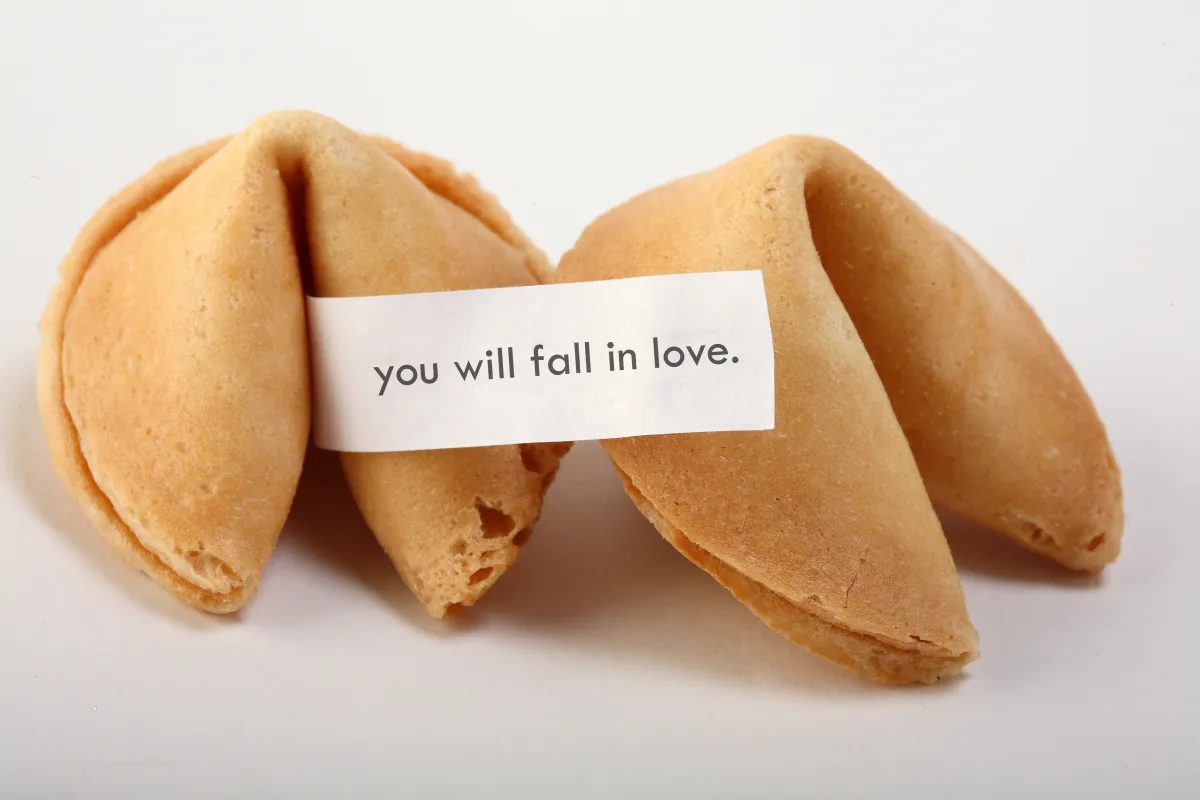
How the Fortune Cookie Generator Works
Each tap of the button above pulls one randomly selected fortune from a curated pool of more than 500 messages. Unlike most random-quote tools, this fortune cookie generator separates its messages into six tonal categories — wisdom, career, love, humor, luck, and self-reflection — so the result feels intentional rather than chaotic. The animation cracks open a folded cookie, the message appears on screen, and a fresh set of lucky numbers populates underneath. Naturally, you can keep tapping for as many fortunes as you want; there is no daily cap and no signup wall.
Behind the scenes, the tool weighs categories evenly so you do not get five career fortunes in a row. Furthermore, it filters out near-duplicates within the same session, which means your second click will not repeat your first. The lucky numbers are generated using the same range traditional fortune cookie printers use (1–55), so the output mirrors what you would actually find tucked inside a real cookie. Importantly, every fortune in the database has been hand-checked to keep the tone family-friendly, which makes this fortune cookie generator usable in classrooms, kid parties, and corporate icebreakers without any awkward surprises.
A Quick History of Fortune Cookies (Before Generators Existed)
Here is the strange truth: fortune cookies are not Chinese. They are not American either, at least not originally. The earliest verified ancestors are tsujiura senbei — folded crackers with paper fortunes inside — sold near Buddhist temples in the Kyoto region of Japan as far back as the 1870s. Japanese immigrants brought the recipe to Hawaii and California in the late 1800s and early 1900s. Specifically, a Japanese gardener named Makoto Hagiwara is credited with serving the first American version at the Japanese Tea Garden in San Francisco’s Golden Gate Park around 1908.
So how did these Japanese cookies become the universal closer at Chinese-American restaurants? Two events shifted the industry. In 1911, the Benkyodo confectionary in San Francisco built one of the first folding machines, which made commercial production viable. Then, during World War II, Japanese-American internment shut down most of the Japanese-owned bakeries that produced them. Chinese-American manufacturers stepped in to fill the gap, and after the war, the cookie became a fixture of Chinese restaurant culture in the United States. Decades later, in the late 1960s, a baker named Edward Louie patented a fully automatic folding machine that mass-produced fortune cookies at industrial scale, and the modern version was born.
Today, the United States consumes roughly three billion fortune cookies a year — yet the cookie remains essentially unknown in mainland China, where the tradition never took root. When a major American chain tried introducing them in Hong Kong in the 1990s, customers reportedly thought the paper was a printing mistake. The next time you crack one open, remember: you are eating a Japanese pastry that became Chinese-American because of a war, then global because of a folding machine. That is the kind of context the digital fortune cookie generator above cannot show you, but it is worth knowing before your next click.
The Six Categories Inside Our Fortune Cookie Generator
Most random-quote tools pull from a single bucket. By contrast, the fortune cookie generator on this page splits its database into six tonal lanes, each engineered for a different mood. Here is what each category contains and when to lean on it.
Wisdom — Short Philosophical Maxims
These are the closest cousins to traditional Chinese-American fortunes. Examples include “A wise person learns more from defeat than from victory” or “The road to insight is paved with curiosity.” Typically, wisdom fortunes use universal language and avoid specifics, which is what gives them their oracle-like feel. They work best when you want a thought to chew on rather than a prediction to verify.
Career — Work and Money Advice
Career fortunes lean predictive: “A new opportunity will arrive within thirty days” or “The project you have been avoiding holds the answer.” Importantly, these are the fortunes most people remember actually coming true — partly because they are vague enough to map onto almost any work situation, and partly because the act of reading one nudges you to look for confirming evidence. That is not magic; that is confirmation bias, and it is still a useful prompt.
Love — Relationship and Connection
Love fortunes are deliberately ambiguous. “Someone you have overlooked is paying attention to you” can apply equally to a coworker, a barista, or a long-dormant friendship. The trick is restraint: a good love fortune never names anyone, never specifies a timeline, and never promises anything irreversible. Otherwise, the tone tips into greeting-card territory and breaks the spell.
Humor — Jokes That Subvert the Genre
Humor fortunes are the dark horse of the database. Examples include “Help, I am trapped in a fortune cookie factory” or “That wasn’t chicken.” Notably, joke fortunes tend to get the strongest reactions in group settings because they break the expectation of solemn wisdom. If you are using the tool at a party, set the category filter to humor and watch the table light up.
Lucky — Omens and Good News
Lucky fortunes promise positive outcomes without naming a domain: “Money is on its way to you” or “A pleasant surprise is closer than you think.” These are paired with the lucky numbers that appear under each result. Essentially, this is the casino-adjacent corner of the database — useful when you want a mood lift, less useful when you want guidance.
Self-Reflection — Questions Instead of Statements
This is the only category that asks rather than tells. “What would you do if you were not afraid?” or “Which voice in your head is loudest today, and is it telling the truth?” Self-reflection fortunes are designed to function as journaling prompts. In particular, they are the most-used category for teachers, therapists, and coaches who pull from this tool for warm-up exercises before a session.
What Real Fortune Cookies Actually Say (The 1,000-Cookie Study)
In 2014, the data journalists at FiveThirtyEight bought 1,000 fortune cookies from a single major supplier and analyzed every fortune inside. The findings explain a lot about why fortune cookies feel the way they do. For instance, only about 19% of the messages were actually predictive (“You will receive good news soon”). The vast majority were observational or aspirational — comments on your character, encouragements to keep going, or general aphorisms with no time component at all. More than half referenced “you,” your strengths, or your weaknesses, which is part of why they feel personal even though they were printed in batches of millions.
The study also surfaced the average sentence length: between eight and twelve words, which is the sweet spot for cracking open and reading aloud without losing the room. Anything longer feels like a Hallmark card; anything shorter feels like a slogan. Furthermore, the most common nouns across the corpus were “life,” “success,” “friend,” and “happiness” — abstract enough to apply to anyone, concrete enough to feel meaningful. The fortune cookie generator above was built with these proportions in mind, which is why the tone matches what you would actually pull from a paper-wrapped cookie at a restaurant.
One unexpected pattern: real fortune cookie databases recycle. Wonton Food, the largest US producer, runs from a pool of about 15,000 fortunes that have been used for decades. New ones get added rarely, and old ones get retired only when they are flagged as offensive or culturally outdated. That is how a famously bizarre fortune (“You will be hungry again in one hour”) survives to this day — once a fortune is in the bank, it tends to stay. Consequently, if a particular line keeps showing up in your real-world cookies, it is probably from a printing batch you have crossed paths with several times before.
Creative Ways to Use the Fortune Cookie Generator
The obvious use is “click for a fun message.” However, the tool earns its keep when you put it to work. Here are six specific applications people have used this fortune cookie generator for, in rough order of how often we hear about them.
1. Party Round-Robin with the Fortune Cookie Generator
Pass a phone or laptop around the table. Each person taps once, reads their fortune aloud, and the group votes on whether it fits them. The “humor” category produces the loudest laughs, but a mixed setting works fine for adults. Additionally, you can add the classic “in bed” rule — every fortune ends with the phrase “in bed,” which is genuinely funnier than it has any right to be.
2. Classroom Warm-Up
Teachers use the self-reflection category to start journaling sessions. The student opens the page, generates a fortune, and writes for five minutes in response to it. Because the prompts are randomized, no two students get the same one in the same lesson, which removes the “I copied my friend” excuse. The tool is free of ads and pop-ups, so it is also school-network safe.
3. Decision Tiebreaker
When two options feel evenly matched, generate a fortune and see which choice it nudges you toward. This is not a serious oracle — but as a tiebreaker, the fortune cookie generator works the same way flipping a coin does. The trick is that your gut reaction to the result (“yes, that means I should take the job”) is the actual signal. The fortune is just a mirror. For a faster yes-or-no version, the Yes No Button on this site does the same job in one tap.
4. Wedding and Event Favors
Couples planning small weddings have used the tool to draft custom fortunes that get printed on slips and tucked into bakery cookies for guests. The strategy is to filter to “love” and “wisdom,” generate a few hundred, copy the ones that fit the couple’s tone, and send them to a printer. It is a cheaper, more personal alternative to ordering pre-printed favor cookies, especially since most pre-printed options use the same recycled lines Wonton Food has been printing since the 1980s.
5. Daily Fortune Cookie Generator Ritual
A small but devoted group of users opens the tool every morning the way other people read horoscopes. The ritual is simple: bookmark the page, click once before coffee, sit with the message for sixty seconds. Whether or not the fortune predicts anything, the practice itself functions as a one-minute mindfulness break, which is the actual benefit. Consequently, several users have told us they remember more of their fortunes than their horoscopes — likely because they choose the click rather than scrolling past it.
6. Writing and Worldbuilding Prompts
Fiction writers use the self-reflection category as a story-seed bank. A line like “Which voice in your head is loudest today?” can become a character’s internal monologue. A line like “An unexpected guest will arrive” can become a chapter opening. Especially for short-fiction writers running prompt-a-day challenges, the tool is a faster source than scrolling Pinterest for inspiration.
Lucky Numbers and Your Fortune Cookie Generator Picks
Below every fortune, the tool generates six lucky numbers between 1 and 55, mirroring the format real fortune cookie suppliers use. The most famous moment in fortune-cookie-as-lottery history happened on March 30, 2005, when 110 Powerball players won the second-tier prize on the same drawing — every single one of them had played numbers from a Wonton Food fortune cookie. Lottery officials initially suspected fraud; in fact, it was just a national batch of cookies all carrying the same printed digits. The combined payout came to roughly $19 million.
The lesson is not that fortune cookie numbers win lotteries — they don’t, statistically — but that they spread fast. If you genuinely want to play numbers from this fortune cookie generator, treat them like any other random pick: fun to play, not a strategy. The actual mathematical odds are identical to picking your own. However, if you are looking for a reason to pick six numbers without overthinking it, the tool does the job in two seconds.
Tips for Writing Your Own Fortune Cookie Sayings
Sometimes the right move is not to pull a fortune from a database but to write one. If you are making custom favors, running a classroom activity, or printing your own batch for a party, the rules below produce fortunes that sound real instead of forced.
- Cap the length at 12 words. Real fortunes average eight to twelve words. Anything longer reads like a greeting card.
- Avoid first person. Fortunes are about the reader, not the writer. Use “you” or no pronoun at all.
- Lead with a verb when possible. “Trust the slow road” lands harder than “The slow road can be trusted.”
- Skip names and dates. A fortune that names a person or specifies a Tuesday in March stops being universal.
- Pass the “in bed” test. If the fortune still makes sense (or is funnier) when you append “in bed,” it is well-written. If it falls apart, the original was probably overspecified.
- Mix categories. A batch of 50 should hit roughly 20% wisdom, 20% career, 15% love, 15% humor, 15% lucky, 15% reflective — the same distribution real producers use.
Fortune Cookie Generator FAQ
More than 500, distributed across six categories. For comparison, Wonton Food — the largest US producer of physical fortune cookies — works from a pool of roughly 15,000 fortunes, but most of those are minor variations of a much smaller core set. The 500-fortune pool here is closer to the unique-saying count of the average commercial database.
Some are reproductions of well-known traditional fortunes. Others are original lines written specifically for this tool. The format, length, and tone match what you would find in a real cookie, which was the design goal — but every fortune was hand-screened to remove anything outdated, awkward, or culturally tone-deaf.
Yes. The full database is family-friendly. The self-reflection and wisdom categories are particularly well-suited for journaling exercises, while humor works well for icebreakers. The tool has no ads, no logins, and no tracking that would trip a school content filter.
Short version: Japanese-American bakeries originally produced them, but during World War II, Japanese-American internment shut those bakeries down. Chinese-American manufacturers absorbed the production pipeline, and after the war the cookie became permanently associated with Chinese-American restaurants. Mainland China still does not really use them — the tradition is almost entirely a US phenomenon.
No, and most do not even try. The 2014 FiveThirtyEight study of 1,000 cookies found that only about 19% of the fortunes were actually predictive. The rest were observations about your character, encouragements, or general aphorisms. The “prediction” framing is a cultural overlay we add to the experience.
Yes. Each result has a copy button and a share link, so you can paste fortunes into a journal app, send them to a friend, or screenshot them for social media. There is no built-in saved history, however; if you want to keep a log of fortunes over time, you will need to copy them out manually as you go.
Related Generators on CalculatorWise
If the fortune cookie generator above scratched the random-fun-tool itch, these related tools work similarly:
- Yes No Button — when you need a one-tap decision instead of a paragraph of wisdom.
- Charades Generator — same party-tool format, but for acting prompts instead of fortunes.
- Kiss Marry Kill Generator — pairs well with the fortune cookie generator for game nights.
- Song Association Game — random word prompts for a music-themed party round.
- The Song Association Game is a super fun online game to test your musical knowledge 🎶
- Try the amazing Random Pokemon Generator to get a random pokemon and stats 🐙
- The Ice Breaker Generator gives you awesome ice breaker questions for any situation 🧊🔨
- Random State Generator to get the best travel tips and foods for each state 🌎
- The Charades Generator to get great Charades words, a built-in timer, and a scorekeeper
- Finally, the Blank Slate Word Generator gives you words for the Blank Slate game. 🎲
- The Navi Name Generator gives you Avatar names in seconds 🎥
- Name Coloring Pages Generator for kids to print and color their names in a cool font 🖍️
- The Random NBA Team Generator to get random teams in a click of a button! 🏀
- Random MLB Team Generator to get a random MLB team right away ⚾
- As well as the Random NHL Team Generator to generate a random NHL team 🏒
- And of course, the Random NFL Team Generator for getting random NFL teams 🏈
- The Angel Number Calculator to figure out your Angel Number 😇
- Aunt Name Generator helps you get the perfect aunt’s name for your book, game, or story in seconds! 👩
- The Street Name Generator can help you come up with the right street name for your project, by letter! 🛣️
- Additionally, the Joke Generator has tons of funny family jokes and one-liners. 🤣
- Instagram Password Generator allows you to create highly-secure passwords in seconds for free. 🖥️
I LOVE THIS!!!!