Want to turn any name into a printable coloring sheet in seconds? The Name Coloring Pages Generator below transforms any name — your child’s, a student’s, a friend’s, or your own — into ready-to-print name coloring pages with bold outlines and decorative fonts. Type the name, pick a style, and print. There’s no sign-up, no watermarks, and no email required.
Name Coloring Pages Generator
Enter your name and select a font to create an awesome coloring page!
How the Name Coloring Pages Generator Works (3 Steps)
The generator runs entirely in your browser, so there’s nothing to download or install. Furthermore, every page renders as a clean, printable image you can save to your device or send straight to a printer. Specifically, the tool uses lightweight outline fonts rather than AI image generation, which means results are crisp at any print size and the lines stay clean enough for younger kids to color inside.
Step 1: Enter the name or phrase
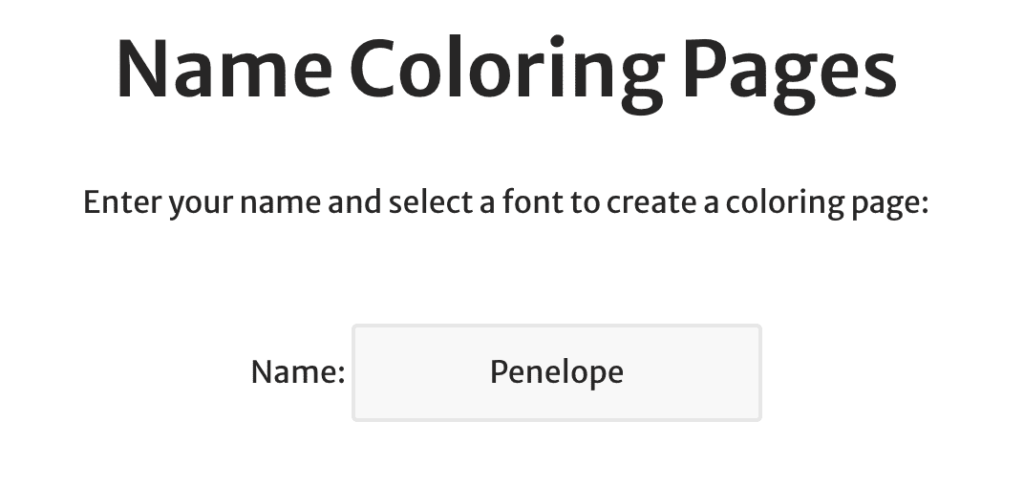
Type any name or short phrase into the text input. Names up to about 12 characters fit cleanly on a standard letter-sized sheet without shrinking the letters too much. Longer phrases (like “Happy Birthday Lily”) also work; however, the letters scale down to fit on one line. For names longer than 12 characters, consider splitting first and last names onto separate generated pages — kids generally find smaller pages easier to color anyway.
Step 2: Pick a font style
Next, scroll through the font options and select one that fits the age and purpose. Bubble-style outlines work well for preschoolers because the wide interior space is forgiving for early crayon control. In contrast, thinner script and graffiti styles suit older kids and adults who want more detailed shading. The preview updates instantly when you click a style, so you can compare a few before committing.

Step 3: Generate, open, and print
Click Generate, then click the result to open it in a new tab at full resolution. From there, use your browser’s print dialog (Ctrl+P or Cmd+P) and set the layout to landscape for short names or portrait for longer ones. Additionally, if you want to save it digitally — for tablets and apps like Procreate — right-click and save the image as a PNG. The output is transparent-friendly, so it imports cleanly into most coloring apps.
Choosing the Right Font Style for Your Name Coloring Pages
Different font styles serve different ages and purposes. As a quick rule of thumb, the wider the interior space inside each letter, the easier the page is for young hands. Below is a breakdown of the four most useful styles, when to choose each, and what coloring tools pair best with them.
Bubble letter name coloring pages (ages 3–6)
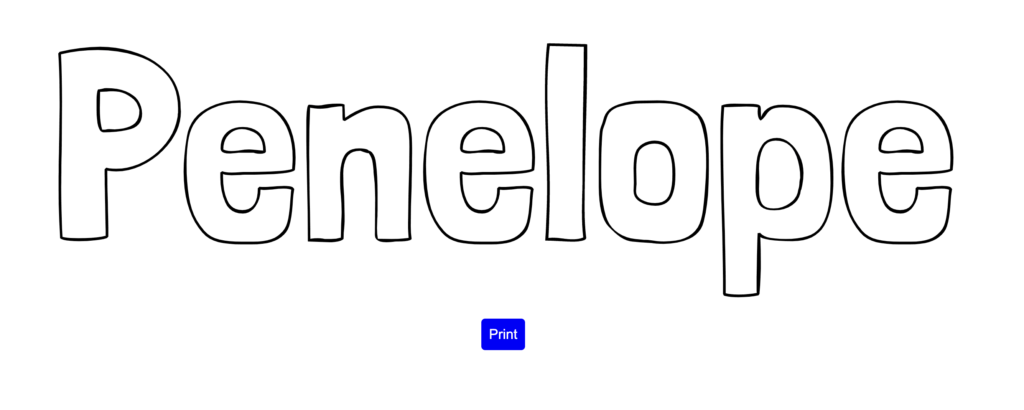
Bubble fonts have rounded, inflated shapes with thick outlines and wide interiors. Consequently, they’re the gentlest choice for new colorers because the large surface area is forgiving — kids can scribble outside the lines and the result still looks intentional. Pair them with chunky crayons or triangular preschool markers. Notably, bubble letters also photocopy well, so teachers can run a class set without losing line quality.
Block outline name coloring pages for classrooms
Block letters have straight edges and uniform thickness, which makes them ideal for letter-recognition activities and tracing. For early literacy work, block-style name coloring pages double as both a coloring activity and a name-writing reference. Pair them with regular markers or colored pencils. Importantly, block fonts also reproduce cleanly when projected on a smartboard.
Graffiti and 3D — best for tweens and teens
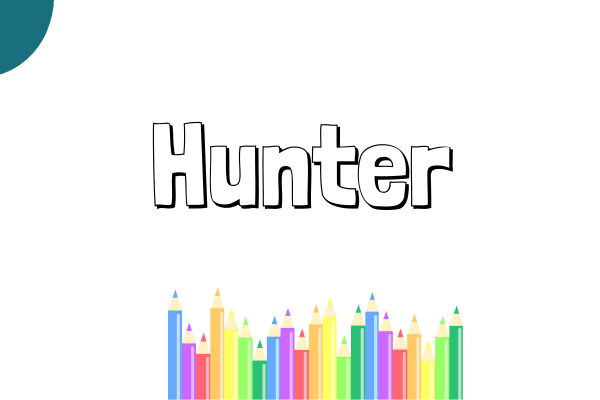
Graffiti styles add depth lines, drop shadows, and angled letters. As a result, they’re more visually interesting for older kids who feel babied by basic bubble fonts. Specifically, the layered effect gives colorers a chance to practice shading from light to dark — a real art skill they can build on. Markers, gel pens, and metallic pencils all work well here. Some kids also enjoy adding their own background patterns, which turns the page into a mini graphic-design project.
Decorative script name coloring pages for adults
Script and decorative fonts have intricate flourishes, which makes them perfect for adult coloring or wall art. Furthermore, the smaller fillable areas mean fine-tipped pens, watercolor brushes, or alcohol markers produce the cleanest results. If you’re framing a finished piece, print on heavyweight cardstock (90 lb or more) so the colors don’t bleed through.
Educational Benefits of Name Coloring Pages for Kids
Coloring pages are not just busywork. In fact, the American Occupational Therapy Association and the National Association for the Education of Young Children both list coloring as a foundational pre-writing activity. Personalized name coloring pages are particularly effective because the child’s own name is one of the first words they learn to recognize and write. Below are the four documented learning benefits and how to maximize each one.
Fine motor skill development
The pincer grip used to hold a crayon is the same grip a child will eventually use to hold a pencil for writing. Therefore, every coloring session is also a strength-training session for the small muscles in the hand and wrist. Specifically, occupational therapists recommend rotating between thicker tools (chunky crayons) for grip strength and thinner tools (colored pencils) for control. Aim for 10–15 minutes per sitting at age 3, scaling up to 30 minutes by age 6.
Letter and name recognition
When a child colors the letters of their own name repeatedly, they internalize each letter’s shape through both visual and kinesthetic memory. Notably, this is significantly more effective than passive flashcards because the child is actively engaging with each letter for several minutes rather than seeing it for one second. Teachers often pair name coloring pages with a verbal letter-naming game: as the child colors each letter, they say it out loud. Consequently, this multimodal practice builds recognition far faster than coloring or naming alone.
Hand-eye coordination and focus
Staying inside the lines requires the eyes and hands to constantly communicate, which strengthens the neural pathways behind precision tasks. Additionally, completing a full page builds attention span — a skill that transfers directly to reading and seatwork. For kids with shorter attention spans, start with smaller-scale name coloring pages (3–4 letter names) before moving to longer phrases.
Self-esteem and ownership
There’s a documented psychological lift kids get from seeing their own name displayed prominently. The phenomenon is sometimes called the “name-letter effect,” and research has shown that people unconsciously prefer letters that appear in their own name. Because of this, a personalized name coloring page tends to hold a child’s interest much longer than a generic coloring sheet, which is why preschool teachers reach for them on the first day of school.
Best Coloring Tools and Paper for Printable Name Pages
The paper and tools you use will dramatically affect the final result. Standard 20 lb printer paper works for casual coloring, however it warps with markers and tears under heavy crayon pressure. Below is a quick reference for matching paper weight and tool to the age and intended use.
| Use case | Paper weight | Best tools |
|---|---|---|
| Casual play (ages 3–6) | 20 lb printer paper | Chunky crayons, washable markers |
| Classroom use (ages 5–10) | 24–32 lb printer paper | Colored pencils, regular markers |
| Adult coloring | 65–80 lb cardstock | Alcohol markers, gel pens, watercolor pencils |
| Framed wall art | 90+ lb cardstock | Watercolor brush pens, fine liners |
For markers — especially alcohol-based ones like Copics or Ohuhus — always test on a scrap piece first. The ink frequently bleeds through standard paper, so heavyweight cardstock is essential if you want sharp edges. Alternatively, slip a sheet of cardboard underneath thinner paper to protect the surface beneath.
Crayons are still the gold standard for kids under six because they don’t bleed, they’re hard to break, and they’re forgiving when a child presses too hard. Importantly, look for crayons labeled “non-toxic ASTM D-4236” — that’s the safety certification you want for very young children who might still mouth the tools.
Creative Ways to Use Personalized Name Coloring Pages
Beyond the obvious “color it and stick it on the fridge” use, name coloring pages have surprisingly versatile applications. Below are six ideas that go beyond standard classroom use.
- Birthday party place cards. Print a name page for each guest, set them at the table, and let kids color their own place card while waiting for cake. Notably, this also doubles as an icebreaker for kids who don’t all know each other.
- Custom thank-you cards. Color the recipient’s name, fold the page in half, and write a message inside. Kids especially love the personal touch, and grandparents tend to keep these forever.
- Welcome-home decorations. For a returning parent, sibling, or pet, hang several colored name pages along the entryway. The result is more memorable than a store-bought banner because every letter was colored by hand.
- Memory-keeping for milestones. Print a name page on each birthday and store the colored versions in a binder. Over time, you’ll build a year-by-year record of how your child’s coloring control evolved — a sweet keepsake parents rarely think to capture.
- Wedding seating charts. For a casual or kids-friendly reception, print guest names in decorative script and let table hosts add a watercolor wash. The handmade effect costs almost nothing and looks far more thoughtful than printed seating cards.
- Therapy and mindfulness exercise. Coloring is a recognized stress-reduction activity for adults too. Specifically, focused coloring lowers heart rate similar to short meditation sessions. Generate your own name in a script font and use it as a five-minute reset between meetings.
Classroom Activities Built Around Name Coloring Pages
Teachers and homeschool parents can stretch a single batch of name coloring pages into a full week of structured learning. Here are five lesson-plan-ready activities that pair coloring with literacy and social-emotional goals.
Day 1: Letter sound treasure hunt
Print each student’s name and have them color one letter at a time, saying the letter’s sound out loud as they go. Then, send them on a 60-second hunt around the room for objects that start with that sound. This pairs phonemic awareness with movement, which boosts retention significantly.
Day 2: Name puzzle
Cut each colored name page into individual letters and have the student reassemble it. For a harder challenge, mix two students’ letters together. Consequently, students practice letter discrimination and sequencing — both core early-literacy skills.
Day 3: Color-by-letter family
Assign a color to each letter category: vowels in red, consonants in blue, repeated letters in green. Then, students color their name according to the rules. This sneaks in vowel/consonant identification under the cover of art class.
Day 4: Name patterns
Have students color their name in a pattern (red-blue-red-blue, or AABB, or ABCABC). Notably, this introduces basic pattern recognition — a math readiness skill that often gets siloed away from literacy work. Pair it with a quick discussion: “What’s the pattern? What comes next?”
Day 5: Name gallery walk
Hang every student’s colored name around the room and do a “gallery walk” where each student presents one thing they like about their work. Importantly, this builds public-speaking comfort and class community in the same activity. End the week by sending the colored pages home — the kids are usually proud enough that they’ll talk about the activity unprompted.
Tips for Coloring Inside the Lines (For Kids and Adults)
Coloring inside the lines is partly skill and partly setup. Below are seven tips that meaningfully improve results — most of them are about technique, not talent.
- Outline first, fill second. Trace just inside the printed line with your color, then fill the interior. This creates a buffer zone that prevents accidentally crossing the boundary.
- Color toward the line, not along it. Pull strokes inward from the outline rather than running parallel to it. Consequently, your hand naturally slows as it approaches the boundary.
- Sharpen colored pencils often. A dull point overshoots edges. Specifically, sharpen every 5–10 minutes during detailed work for the cleanest lines.
- Use light pressure for layering. Press lightly on the first pass and build color in 2–3 layers. Heavy pressure on the first pass tends to over-deposit pigment and harden the wax, which makes blending impossible.
- Rotate the page, not your wrist. Spin the paper so each line you draw moves toward your dominant hand. Naturally, this is more comfortable than contorting your wrist.
- Anchor your hand. Rest your pinky on the paper for stability. This is the same trick calligraphers and tattoo artists use, and it works just as well at age five.
- Slip a blank sheet under your coloring hand. Marker pigment and graphite from colored pencils can smear when your palm drags across finished sections. Therefore, a buffer sheet keeps the work clean.
Frequently Asked Questions About Name Coloring Pages
Are these name coloring pages free to print?
Yes — every page generated here is completely free, with no watermarks and no sign-up required. You can print as many copies as you want, including for classroom and church use. Commercial resale of the printed pages, however, is not permitted.
What’s the maximum name length the generator accepts?
The tool accepts up to about 20 characters, but for the cleanest result, names of 12 characters or fewer print at the largest readable size. Longer phrases auto-scale to fit on one line, so you may need landscape orientation for things like “Happy Birthday” plus a name.
Can I save the name coloring pages as a PDF?
Yes. Open the generated image in a new tab, then in your browser’s print dialog choose “Save as PDF” instead of a physical printer. This is the easiest workflow if you want to email the page or store it digitally for later printing.
Do the name coloring pages work on tablets?
Yes. Save the generated image to your tablet, then import it into any drawing app — Procreate, Goodnotes, Notability, or the free Apple Notes pencil tool. The transparent-background-friendly outline imports cleanly and you can color directly on top with a stylus.
What ages are name coloring pages best for?
The bubble and block fonts are ideal for ages 3–8 because the wide interior space is forgiving for developing motor control. The graffiti and decorative styles, on the other hand, are better suited to ages 9 and up, including adults who enjoy detailed coloring as a relaxation activity.
Why do my markers bleed through the paper?
Standard 20 lb printer paper is too thin for alcohol or wet markers. To fix this, reprint on heavier paper (32 lb or higher), or slip a piece of cardstock under the page to absorb the bleed-through. Crayons and colored pencils don’t have this problem on regular paper.
Try More Free Generators on CalculatorWise
If your kids enjoyed the name coloring pages, here are a few other interactive tools on the site that work well for classrooms, parties, and rainy-day creative time:
- Charades Generator — instant prompts for kids’ parties and family game nights, with categories filtered by age.
- School Name Generator — perfect for fictional classroom projects, story writing, and pretend-play setups.
- Blank Slate Word Generator — generates random word prompts for the popular party game and creative-writing warm-ups.
- Pokemon Town Name Generator — fan-favorite tool for kids who love drawing imaginary maps to go with their colored names.
The name coloring pages generator is free to use as often as you’d like, and the page is updated each year with new font styles. Bookmark it for the next birthday, classroom unit, or quiet afternoon — and have fun coloring.