Need an authentic Twi’lek name from Ryloth? The Twi’lek Name Generator creates names that follow real Star Wars canon — pulling from the melodic, vowel-heavy phonetics of the Ryl language, applying the personal-name-plus-clan-name structure, and generating results in seconds. Choose a gender, pick how many you want, and get authentic options ready for tabletop campaigns, fanfiction, video game characters, or roleplay. Importantly, every output is built from the same phonetic rules canon writers use — no random syllable mashing.
Official Twi'lek Name Generator 🌌
Generate awesome, authentic twi'lek names in seconds.
How the Twi’lek Name Generator Works
The Twi’lek Name Generator pulls from a curated list of personal names and clan names that follow the rules established across forty years of Star Wars canon. Specifically, it builds each output in two stages: first the personal name (used among friends and family), then the clan name (used in formal contexts). When the two combine, an apostrophe shifts the pronunciation — for example, Bibfort’una becomes “Bib Fortuna” when non-Twi’leks speak it.
The tool gives you three controls: gender (male, female, or any), name count, and a refresh button to regenerate. Female names skew toward open vowels and soft consonants because canon describes them as more melodic. Male names allow more closed consonants — final t, k, and n sounds appear far more often. Names labeled “any” are gender-neutral patterns that work for either presentation.
Importantly, this Twi’lek Name Generator does not invent random syllables. Each component is either drawn from canon or built using the same syllable rules canon writers follow: open vowels (a, aa, e, ee, i, o, u), soft sibilants (s, sh), and gentle stops (t, k, l, n, r). Hard clusters like gr, kr, and dr are reserved for warriors or outcasts in line with the worldbuilding from established Ryl phonetics references.
Twi’lek Naming Conventions Explained
Every Twi’lek has two names that lock together to form one. The structure is: [Personal Name] + [Clan Name], joined with an apostrophe that shifts where the syllable break falls.
Take the Jedi Aayla Secura. Among other Twi’leks she would be called Ayla’secura — one continuous name, with the apostrophe marking a glottal pause between “Ayla” and “secura.” Non-Twi’leks (and Republic record-keepers) couldn’t pronounce the glottal stop, so they inserted a space, giving us “Aayla Secura.” Hera Syndulla follows the same rule — among Twi’leks she’s Hera’syndulla.
This matters for storytelling. If your character is among other Twi’leks (a Ryloth scene, a refugee community, family conversations), they’d be referred to with the apostrophe form. Among aliens, however, they’d use the spaced version. Switching between the two is a subtle worldbuilding signal that shows you understand Ryl culture beyond the surface.
Furthermore, a few additional rules govern the system:
- Exiles and outcasts have “ripped” names. When a Twi’lek is exiled from their clan, the clan portion is severed — sometimes with a partial syllable left attached as a permanent mark. Bib Fortuna is the canonical example. His full name was Bibfort’una; “Bibfort” is the personal name, “una” the clan. After exile, he was known only as Bib Fortuna with the clan deliberately kept incomplete.
- Slaves often lose names entirely. Twi’leks taken off-world as slaves frequently had their names replaced or shortened by their owners. The name Oola, for example, is a shortened slave name — her original Twi’lek name is unknown.
- Children carry the maternal clan. Twi’lek clan affiliation typically passes through the mother in established lore. A child of two clans takes the mother’s clan name unless formally adopted.
These rules give you concrete decisions to make when creating a character. Is your Twi’lek in their home territory or in exile? Are they free or enslaved? The answer shapes which name format the output should be styled as before you commit it to a story or character sheet.
Authentic Twi’lek Female Names with Meanings
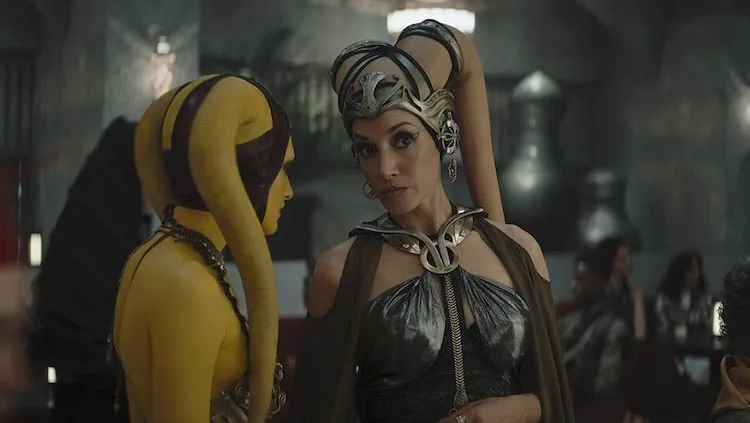
The names below are drawn from canon characters, expanded entries on the Ryl language, and naming patterns established in the Star Wars: Galaxies and Star Wars: The Old Republic source material. Specifically, each carries a meaning rooted in Ryl roots like aay (mist), kee (dawn), vyl (water/blue), suri (song), and neeran (sister).
| Name | Meaning |
|---|---|
| Aayla | Mist or smoke |
| Suri’mar | Song of the south wind |
| Kee’tana | Dawn over Ryloth |
| Vyl’ana | Blue water-singer |
| Numa’ren | Brother’s keeper |
| Oola | Old Ryl word for “graceful” |
| Lina’syndar | Lily of the Syndar clan |
| Hera | Light on the lekku |
| Naa’lin | Daughter of the soft caves |
| Ressi’fae | Cool-breath dancer |
| Tann’ela | Wind-dancer |
| Ayee’ren | Daughter of the warm winds |
| Tirah’syn | Sweet song |
| Mon’eela | Quiet flame |
| Vyni’ka | Vine of the desert |
| Saaj’lin | Daughter of the green cliffs |
| Korel’ana | Healer’s child |
| Lessa’ree | Song of the morning |
| Eea’tan | Twin of the dawn |
| Mira’val | Crimson valley |
Notice the patterns. Female names rarely end in hard consonants. Most close on a vowel or a soft “n” or “l.” Apostrophes appear roughly two-thirds of the way through the name, marking the personal-clan break. Notably, four of these names (Aayla, Hera, Oola, Numa) appear in canon — the rest follow canon rules without duplicating existing characters.
Authentic Twi’lek Male Names with Meanings
Male Twi’lek names allow harder consonants and abrupt endings. Specifically, ending sounds like -tor, -rik, -vex, -an, and -ko are common. Several names below come directly from canon (Cham Syndulla, Pakka, Orn Free Taa, Bib Fortuna), and the rest follow established phonetic rules.
| Name | Meaning |
|---|---|
| Cham | Strong-willed, “stone” |
| Bibfort | Bright morning |
| Orn | Mountain-shadow |
| Pakka | Quick-handed |
| Bel’tor | Master of the south caves |
| Mev’rik | Warrior of the cliff |
| Drev’an | Stone-keeper |
| Kor’lekk | He who shakes the lekku |
| Tann’jek | Hunter of the dunes |
| Vrann | Iron-throated |
| Drak’vex | Sharp-spoken |
| Hess’tor | Far-walker |
| Mossan’kar | Singer of the deep |
| Tev’rok | Stone-shoulder |
| Aramm | Root of the desert |
| Kez’lan | Twin-tailed |
| Dakk’oran | Brave-hearted |
| Sev’ko | Quick-blade |
| Vorn’tek | Strong fist |
| Marr’tan | Bone-weaver |
When generating male Twi’lek names through the tool, you’ll see a stronger preference for closed syllables and consonant clusters. Naturally, this is intentional — canon writing for characters like Cham Syndulla and Orn Free Taa shows male names as more grounded and weighty compared to the airier female names.
The Lekku Language and Why Names Matter on Ryloth
Twi’leks have two communication systems: spoken Ryl, and Lekku — a silent language conveyed entirely through movement of the head-tails. According to canon, the lekku contain part of the Twi’lek brain, which is why subtle motions can convey meaning the same way a human raises an eyebrow or shrugs.
This affects names in a way most non-fans miss. A Twi’lek’s personal name, when spoken in Ryl, is paired with a small lekku gesture that emphasizes one syllable. Different gestures change meaning. Aayla’secura with a curl of the right lekku might convey respect. The same name with a flick of the lekku tip could be informal — like calling a friend by a nickname.
The Twi’lek Name Generator can’t perform lekku gestures, obviously. However, when you write a Twi’lek character, paying attention to which syllable the lekku emphasizes is a way to add depth that almost no other writers bother with. For tabletop GMs running Star Wars games, this is a free worldbuilding move: each NPC introduction can include a brief lekku motion that lets the player learn something about the character before they speak.
Pakka, the Ryloth Resistance pilot from The Clone Wars, was so named because his lekku always twitched fast — “Pakka” in Ryl means “quick-handed,” but his lekku told the rest of the story. Similarly, Cham Syndulla’s lekku barely move — fitting a name that means “stone.” Specifically pairing the lekku motion to the meaning of the name is the kind of detail that marks careful Star Wars writing.
Naming by Skin Color and Clan Subgroup
Twi’lek skin color is more than cosmetic. Different subgroups have different cultural associations, and naming traditions sometimes reflect them.
Common-color Twi’leks (green, orange, tan, pink, purple) make up the vast majority of the Ryloth population. Their names follow standard Ryl conventions with no special markers. Most canon Twi’leks fall into this group.
Rutian Twi’leks (blue) descend from underground clans that historically practiced water worship. Naming traditions here often include water-related roots: vyl (water), naa (deep), lin (cool stream). Names like Vyl’ana, Naa’lin, and Lessa’ree carry these markers. Aayla Secura is a Rutian Twi’lek, which makes her name (“mist”) thematically perfect.
Lethan Twi’leks (red) are the rarest subgroup — only one in a million Twi’leks have this pigmentation. Lethan naming patterns favor fire and crimson roots: mar, vex, vri. Names like Mira’val (“crimson valley”) and Drak’vex (“sharp-spoken”) would mark a Lethan character. Because they’re so rare, Lethan Twi’leks often face superstition — some clans treat them as blessed, others as cursed, and their names sometimes carry the weight of either reputation.
If you’re using the generator output for tabletop or fiction, deciding the skin color first and then matching the name to that subgroup is a fast way to write a more textured character. For example, a blue Twi’lek named Drak’vex would be a striking outlier — and that contradiction itself becomes a story hook.
Famous Twi’lek Characters and What Their Names Reveal
Twi’lek naming in canon is consistent enough that you can read a character’s background from their name once you know the rules.
Aayla Secura (“mist” / Secura clan): The mist meaning suits a Jedi who fought through the smoke and fog of countless battlefields. Secura is a high-status clan name, fitting her later rank as Jedi Knight.
Hera Syndulla (“light on the lekku” / Syndulla clan): Hera’s father, Cham Syndulla, was the leader of the Ryloth resistance. Her name marking (“light”) works as foreshadowing — she eventually becomes the leader of the Ghost crew and a Phoenix Squadron general, lighting the way for the rebellion.
Cham Syndulla (“stone” / Syndulla clan): A name of weight and unyielding willpower. Cham’s role as the symbolic backbone of Ryloth’s resistance is in the name itself.
Bib Fortuna (originally Bibfort’una, exiled): Bib Fortuna’s truncated name is a permanent mark of his exile. In the original trilogy he serves Jabba the Hutt with an obsequious manner that fits a man trying to rebuild status from nothing.
Numa (“of the people”): Numa is a child during the Clone Wars Ryloth arc. Her name is a common Ryl word, which fits a young character not yet given a clan affiliation. She calls the clones “nerra” — Ryl for brother — extending kinship to non-Twi’leks, which is deeply unusual.
Orn Free Taa (“mountain-shadow,” Taa clan): A Senator in the Galactic Senate. The “Free” in his name is a Republic-era title — Twi’lek senators often added Galactic Standard honorifics to make their names easier for non-Ryloth audiences.
When you generate a name with this Twi’lek Name Generator, look at the meaning the tool provides and ask: how does this meaning fit (or contrast with) the character I’m building? A character whose Ryl meaning matches their personality is consistent. A character whose meaning ironically opposes their personality (a “stone” who is actually flighty, a “mist” who is the most decisive person in the room) is more interesting.

Tips for Using the Twi’lek Name Generator Effectively
Generate ten names, not one. The first result is rarely the best. Pull a list of ten and read them aloud. The right Twi’lek name should feel like it could glide off the lekku — if you’re stumbling on the consonants, your reader will too.
Match the name to the role. Smugglers and bounty hunters in canon tend to have shorter, harder names (Cad Bane is one example, though he’s Duros, not Twi’lek). Diplomats and politicians have longer, smoother names (Orn Free Taa). Jedi often have melodic names with poetic meanings (Aayla, Vos). Pick a generated name that fits the character archetype.
Test the apostrophe form. Once you’ve picked a name, write out both versions — Aayla Secura and Ayla’secura — and decide which form your story uses when. Twi’lek-to-Twi’lek scenes use the apostrophe. Mixed-species scenes use the spaced form. This is one of the cheapest worldbuilding moves you can make.
For tabletop NPCs, generate twenty. GMs running Star Wars roleplaying games (Edge of the Empire, Force and Destiny, the Saga Edition d20) need a name list at the table. Print or save twenty Twi’lek names before the session. When a player asks the cantina bartender’s name, you’ve got an authentic Ryl-style name ready in seconds.
Cross-check against canon before publishing fanfiction. The Twi’lek Name Generator avoids existing canon characters, but if you’re publishing on Archive of Our Own or FanFiction.net, do a quick search of your chosen name on Wookieepedia first. Two stories with the same Twi’lek name causes confusion — and canon characters are pretty thoroughly documented.
When to Use the Twi’lek Name Generator for Roleplay and Writing
SWTOR roleplay. Twi’leks are a playable race in Star Wars: The Old Republic, and naming is the first interaction other players have with your character. The Twi’lek Name Generator outputs work directly in the SWTOR character creator without requiring any reformatting.
Tabletop campaigns. Whether you’re running Edge of the Empire, Saga Edition, or a homebrew Star Wars setting, a name list of fifteen to twenty Twi’lek names lets you populate Ryloth scenes, slave markets, smuggler hideouts, and Jedi temples with named NPCs without scrambling mid-session.
Fanfiction. AO3 has tens of thousands of Star Wars stories, and Twi’lek original characters are a popular slot — particularly as Jedi padawans, rebellion fighters, and crew members. A canon-accurate name signals to readers that you’ve done your homework, which buys you trust for the rest of the story.
Video game character creation. Star Wars: The Old Republic, Star Wars: Galaxies, KOTOR, Jedi: Survivor, and various Star Wars-themed Roblox and Minecraft mods all support Twi’lek characters. The Twi’lek Name Generator gives you names that fit the tone of each game’s writing.
Cosplay and convention identities. Twi’lek cosplayers at Star Wars Celebration and other 2026 conventions often choose a Ryl-style stage name. Generated names work as performance identities at panels, photo shoots, and group cosplays.
Worldbuilding for original fiction. If you’re writing science fiction inspired by Star Wars (without using Disney IP), the linguistic conventions of Twi’lek names — vowel-heavy, lekku-emphasized, clan-structured — are a template you can adapt for your own alien species. Use the generator’s output as a study of phonetic patterns rather than direct names.
Twi’lek Name Generator FAQ
Are these names canon-accurate?
Yes. Specifically, the Twi’lek Name Generator pulls from established Ryl phonetic rules documented on Wookieepedia and applies the canonical personal-name-plus-clan-name structure with an apostrophe joiner. Some output names are drawn directly from canon characters (Aayla, Cham, Pakka, Numa); the rest are constructed using the same naming logic the canon writers use. None of the generated names contradict established Star Wars lore.
What’s the difference between a Twi’lek name and a name with a space (like “Hera Syndulla”)?
The spaced form is how non-Twi’leks pronounce the name. In Ryl, the name would be Hera’syndulla — one continuous word with an apostrophe marking a glottal pause. Republic record-keepers and Galactic Standard speakers couldn’t pronounce the glottal stop, so they inserted a space. Both forms are correct depending on context: use the apostrophe in scenes among Twi’leks, the spaced form in mixed-species scenes.
Can I use these names for commercial projects?
The names themselves are not copyrighted because they’re built from linguistic patterns rather than canon character names. However, the Star Wars universe is owned by Disney/Lucasfilm. You can use Twi’lek-style names for commercial fiction set in your own original universe (just don’t call the species “Twi’lek” if you’re publishing for profit). For non-commercial fanfiction, the names are fair use. For commercial Star Wars fiction, you’d need a Lucasfilm license regardless of names.
How do I pronounce the apostrophe in Twi’lek names?
The apostrophe represents a glottal stop — the same sound English speakers make in the middle of “uh-oh.” For Aayla’secura, you’d say “Aayla” then briefly close your throat, then say “secura.” If pronouncing the glottal stop feels difficult, just use the spaced version (Aayla Secura). Both are accepted in Star Wars community usage.
What gender do most Twi’lek names lean toward?
Female Twi’lek names are typically more melodic, with open vowels and soft endings. Male names allow harder consonants and abrupt closes. The “any gender” setting on the Twi’lek Name Generator produces names that work for non-binary or gender-neutral characters — these typically use the softer middle ground between the two patterns.
Do these Twi’lek names work for Lethan or Rutian characters?
Yes. While certain naming roots are more common among Rutian (water-themed: vyl, naa, lin) and Lethan (fire-themed: mar, vex) Twi’leks, no name is restricted by skin color. The Twi’lek Name Generator output works for any subgroup. Choosing a thematically aligned name is a worldbuilding choice, not a hard rule.
Related Generators on CalculatorWise
If you’re building a Star Wars character roster or expanding into adjacent fantasy and sci-fi worlds, you might also enjoy:
- The Hogwarts Legacy Name Generator for crossover or magical-school characters
- The Borg Name Generator for a Star Trek tonal contrast
- The Dragonborn Name Generator for D&D-style fantasy parallels
- The Half Elf Name Generator for fantasy-meets-sci-fi blends
- The Ancient Greek Name Generator for human characters with non-English origins

Updated May 2026 — now includes expanded clan name lists, Lethan and Rutian thematic markers, and lekku-language guidance for tabletop GMs.
More Free Tools and Content You Might Love
We have a number of other fantasy name generators on this site, such as:
- The Hogwarts Legacy Name Generator for magical character names by house and gender 🪄
- The Random Pokemon Generator for getting any Pokemon and their stats in seconds!
- Dwarf Name Generator, perfect for any Dwarf character 🧙🏼
- The Dwarven City Name Generator, which helps you get realistic Dwarven city names ⛰️
- Hobbit Name Generator, which is excellent if you need authentic Hobbit names fast 🧝♂️
- The Mentor Name Generator, which is perfect for a mentor character 🔮
- The Dragonborn Name Generator if you need D&D-inspired names 🐉
- The Devil May Cry Name Generator if you’re a fan of the famous Devil May Cry series 🎮
- Finally, the Demon Name Generator is amazing for demon names 😈
- The Giant Name Generator is fantastic for getting names for any type of giant 🗿